
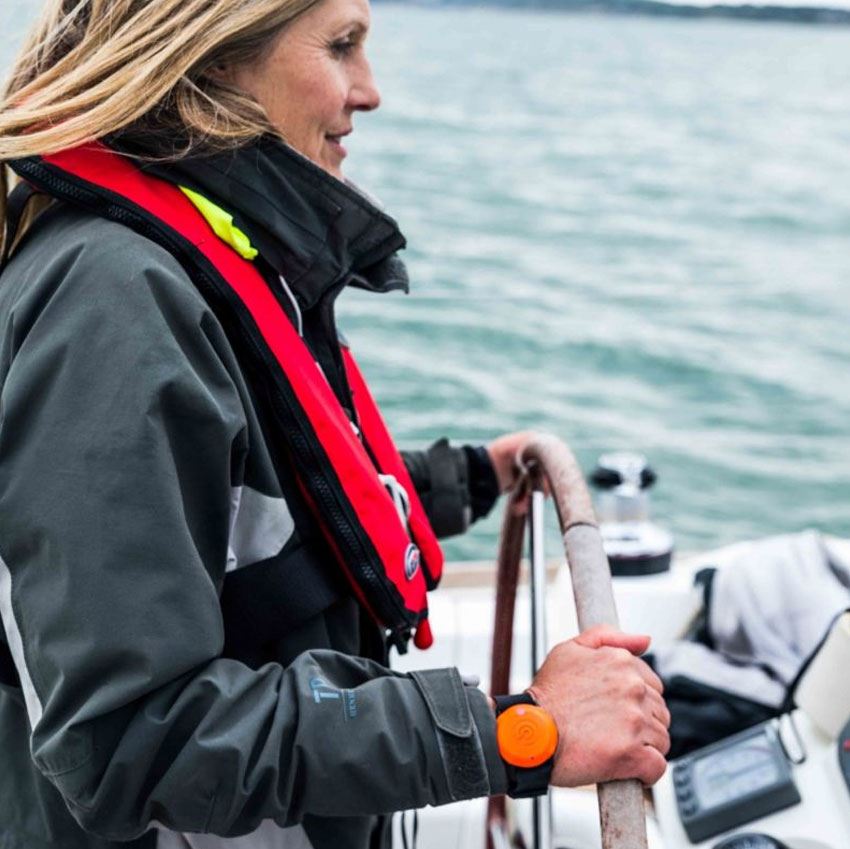
It's one of the most common questions we're asked: do I legally have to wear a kill cord in the UK? The short answer is that for a private leisure boat, there's currently no general law that says you must. The longer answer is that every UK safety body says you should, and the reasons are hard to argue with.
What the law says
For privately used leisure boats in the UK, there's no general legal requirement to fit a kill cord, or to wear one if it's fitted. That surprises a lot of people, especially as some other countries have moved the other way. France, for example, now requires the helm to be attached to a kill switch whenever the engine is running (see our article on France's new kill switch rule).
There are some important exceptions and caveats:
- Commercial use: boats used commercially operate under Maritime and Coastguard Agency codes of practice, which set their own requirements. If your boat is coded, check the code that applies to it.
- Local rules: harbour authorities can set their own rules and regularly remind users to wear kill cords. Cowes Harbour Commission, for example, issued a notice to mariners on kill cord use in 2024 after a near-fatal incident in Plymouth.
- Insurance: your policy is likely to expect you to operate the boat safely. Not using a kill cord that's fitted could count against you if something goes wrong.
Rules change, so check with your harbour authority and insurer for anything specific to your area or boat.
Why the advice is so clear
Kill cords became front-page news in the UK after an accident near Padstow in 2013, when a family of six was thrown from their RIB. The boat kept circling, and two people died. The boat's kill cord wasn't being worn.
The Marine Accident Investigation Branch issued a safety bulletin that still underpins UK advice today. Its four recommendations for anyone with a kill cord fitted:
- Test it regularly to make sure the engine stops when it's pulled.
- Make sure the cord is in good condition.
- Always attach it securely to the driver, ideally before the engine is started, and certainly before the boat is put in gear.
- Stop the engine before handing the kill cord to another driver.
The RYA goes further: wear the kill cord whenever the engine is running, around your leg rather than clipped to clothing, never extend it, test it at the start of every day, and keep a spare on board so someone can restart the engine if the driver and cord both go over.
Why people don't wear them
If the advice is so clear, why do so many people still leave the cord dangling from the dash? Usually because a cord gets in the way. It stops you moving around the boat to set fenders, haul a pot, land a fish or help a guest. On a fishing boat, the skipper may be away from the helm more often than at it.
That's exactly the problem a wireless kill switch solves. Instead of a cord, the driver wears a small tag. If the tag goes in the water, or moves further from the helm than you've set, the engine stops. You can move around the boat freely and still be protected.
The wireless alternative
The RYA lists wireless kill cords as an alternative to the traditional lanyard, and advises checking that any device suits your engine. OLAS Guardian is a wireless kill cord and overboard alarm:
- If the wearer goes overboard, the alarm sounds and the engine stops about 2 seconds later.
- Up to 25 tags can be tracked, so crew and passengers can be protected too, each set to stop the engine, sound the alarm, or both.
- It's wired alongside your existing kill cord, so the cord still works at the helm.
- After 7 seconds, anyone left aboard can restart the engine and go back. The free OLAS app logs where the tag went in and guides you back.
For boats with an NMEA 2000 chart plotter, OLAS N2K does the same and puts the overboard position on the plotter. For more on how wireless systems compare with a cord, read Are wireless kill switches effective for powerboats?
The bottom line
You may not be breaking the law by leaving the kill cord off a private leisure boat in the UK. But the people who investigate accidents and train boaters all agree you should wear one every time the engine is running. If a cord gets in the way of how you use your boat, a wireless system lets you follow that advice without it.
See the OLAS engine kill switch range.
This article is general guidance, not legal advice. OLAS Guardian is an aid to, not a replacement for, standard MOB procedures and safety equipment. It does not give instantaneous protection if the operator falls into the path of the vessel.